Bokkies Biltong sells more, to more people, from the same shop window.
A South African butcher shop in Barrie, Ontario, shipping biltong across Canada. Four months of search work, measured against the four months before it started. Here is what actually moved.
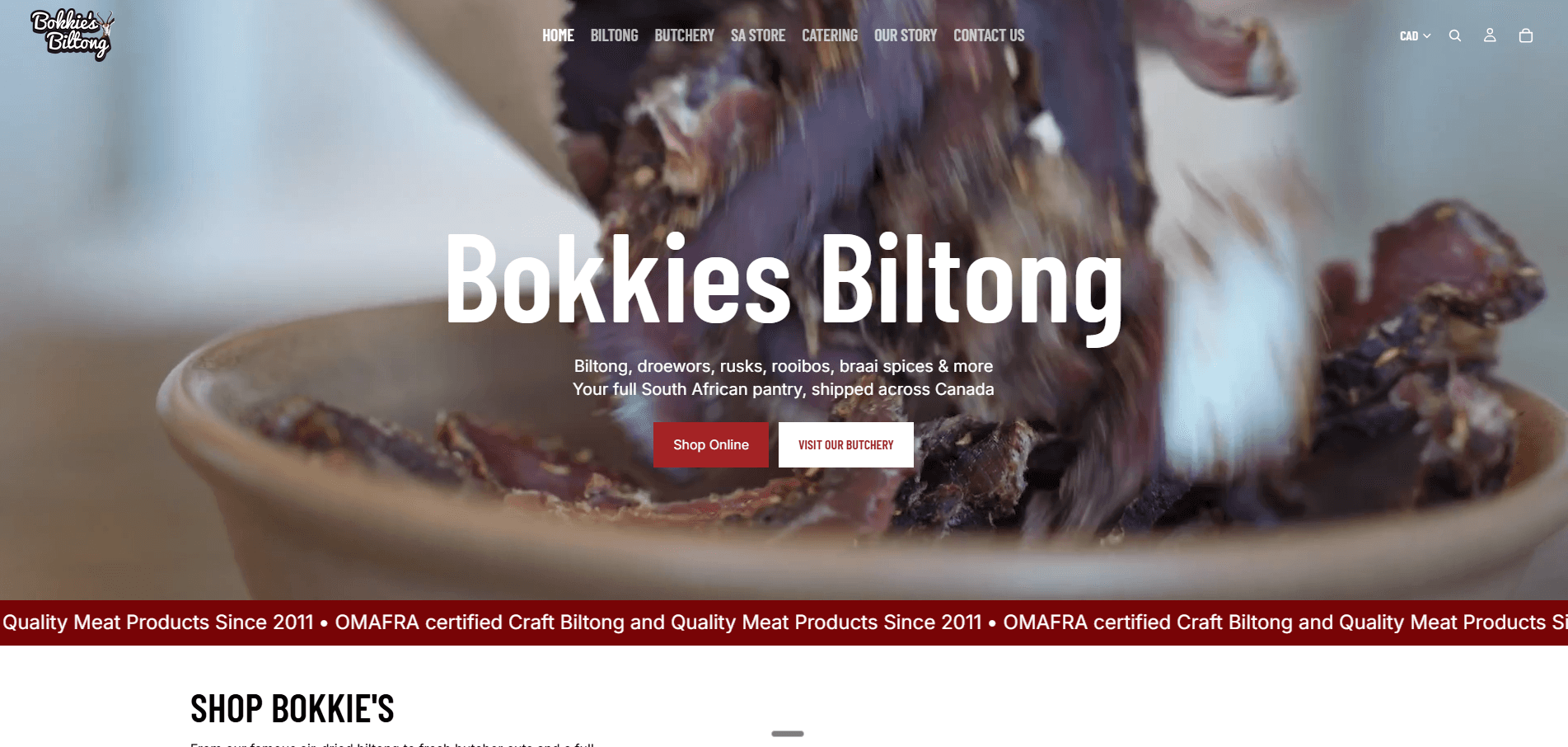
bokkiesbiltong.com
- Client
- Bokkies Biltong Inc.
- Sector
- South African butcher
- Scope
- Store rebuild + search
- Measured
- May to Aug 2026
Up 39%. That is about CA$13,750 more through the till than the four months before, from the same shop.
Nearly double the CA$6,605 before. This is the part the search work is responsible for. Money from Google ads is not counted here.
Up from 271. That is roughly 140 more parcels going out of the door over the same four months.
It was 1.6%. Put another way, roughly 24 in every thousand people now buy something where 16 did before, from the same shop window.
All four figures cover 1 May to 31 August 2026, compared against the four months immediately before the work started. Sales and orders come from Shopify, the platform the shop runs on.
Plenty of people wanted their product. Almost none of them could find it.
Bokkies sells biltong, boerewors and South African groceries to homesick expats across Canada. The demand is real. Thousands of people search for exactly what they sell every month.
Google was sending those people somewhere else. For their single biggest product term they sat on page two, where nobody looks. For the term that describes their whole business to a national audience, they did not appear at all.
The visitors who did arrive were slipping away before checkout. A store that leaks buyers turns every bit of hard-won traffic into wasted effort.
The old store sold biltong. It never sold Bokkies.
The old hero sold ingredients. Ten menu links, a headline about nitrates and preservatives, and no button anywhere to actually buy something. A first-time visitor had nothing telling them who Bokkies were or where to start.
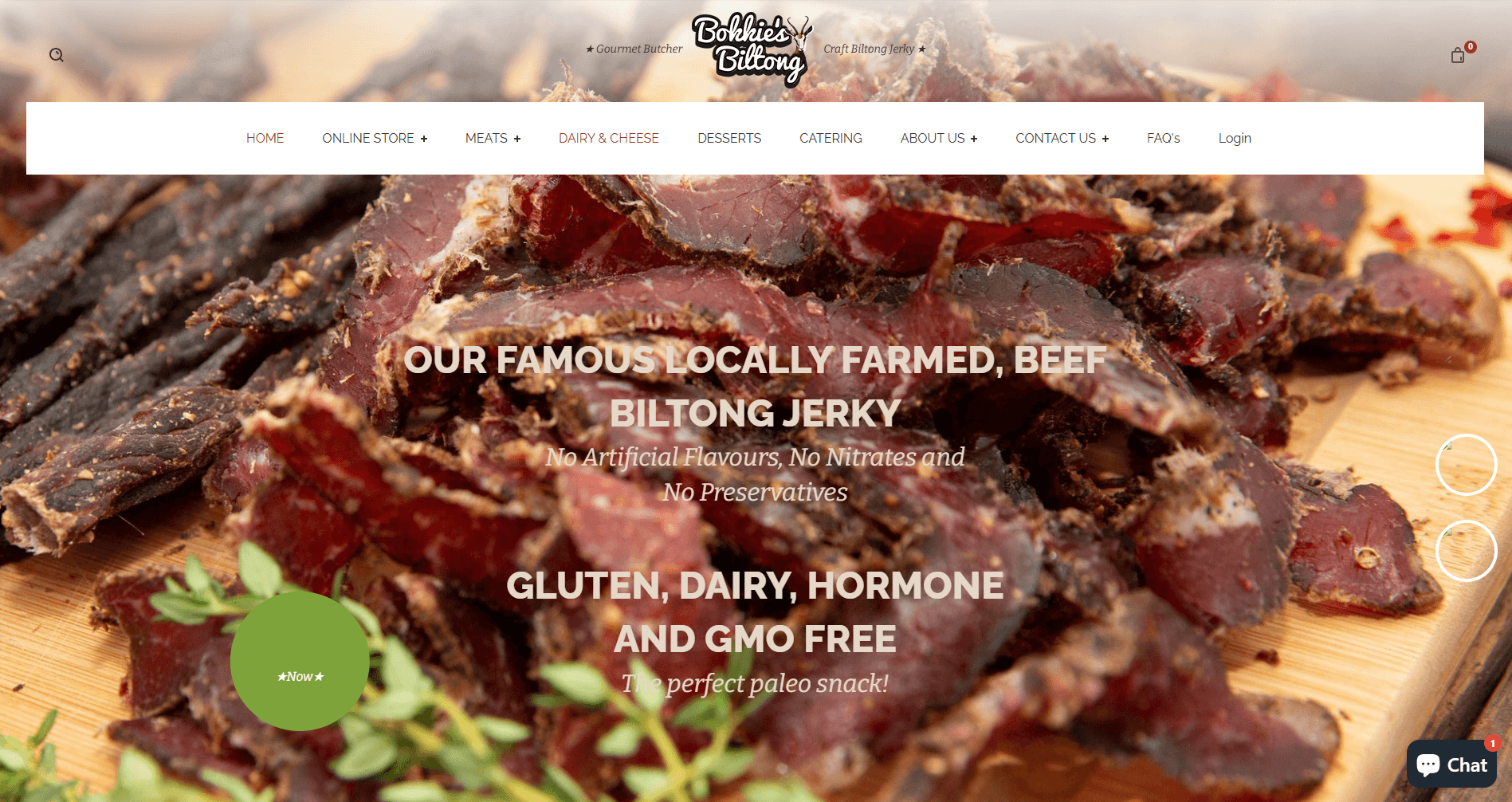 BeforeAfter
This is what a campaign that is working looks like.
Straight from Google. Clicks are the people who came through to the shop. Impressions are how often Google put it in front of somebody searching. Both climbing together is the pattern you want.
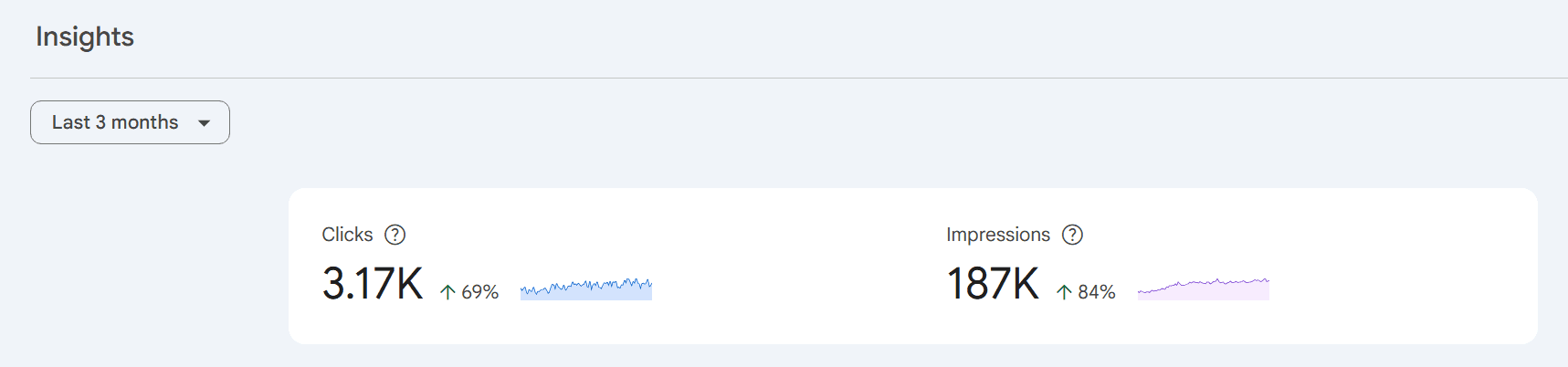
Straight out of Google Search Console, unedited. Google compares the last three months against the three before them.
Where it started, and where it went.
Eight months, split down the middle. The four grey months are the four before the work started. August was the best month in the whole window.
Total sales per month
CAD, from Shopify
Orders per month
Shopify orders
People finding them on Google, per month
People who found them for free on Google, not through ads
And it is not just a good time of year.
The same four months, a year apart. The shop sold 65% more than it did last May to August, on 7% fewer visitors, because far more of the people arriving now actually buy something.
Money taken, May to August
Last year against this year
People finding them on Google, May to August
Last year against this year
Look at May and June on the Google chart: both are below last year. That is normal, and it is worth understanding. Work started on 1 May, and Google does not re-read a website the day you change it. Pages have to be found, read and trusted before they move. The step change came in July, once the rebuilt pages had been picked up, and August was the best month in the whole eight-month window. Anyone promising results in the first month is selling you something else.
Four things, done every month.
No secret lever and no one-off trick. The same four jobs repeated until the numbers moved.
Rebuilt the online store
The old store leaked buyers. We rebuilt it around one job: get a South African abroad from craving biltong to a completed order without second-guessing anything.
Built the pages people search for
Not just product pages. A page for the town they serve, pages for products people search by name, and the questions buyers ask before they trust a butcher they cannot walk into.
Earned links from other sites
Google trusts a store that other websites vouch for. Placed one at a time on sites that made sense, not a bulk package bought in an afternoon.
Reported every month
Rankings, clicks, and what moved. Every month, in plain language. No dashboard logins, no jargon, no guessing what you paid for.
Nearly half the extra money came from people finding them on Google.
The shop took CA$13,750 more than it did in the four months before. CA$5,942 of that came from people who found it on Google without an ad, which is the part this work is responsible for. It is also the part that keeps running after the invoices stop, because the pages stay where they are.
Change against the four months before
- Orders from people who found them on Google
- +146%
- Money those people spent
- +90%
- People finding them on Google
- +54%
- People arriving from Google ads
- +16%
- People typing the address in directly
- -6%
You have been shown inflated numbers before. So here is how we checked ours.
Every number above comes out of the store's own reporting and Google Search Console. Three things we did to keep it honest.
Compared like for like
Four months of work, 1 May to 31 August 2026, measured against the four months immediately before it. Against the same months a year earlier the store sold 65% more on 7% fewer visits, so this is not a seasonal swing.
Paid traffic kept separate
Bokkie’s paid Google for ads the whole time, before and during. Everywhere this page says people found them on Google, it means people who found them for free in the normal search results, with the ad traffic taken out. Visits from ads grew 16% over the same four months. Visits from the free results grew 54%, and orders from them grew 146%.
What it cost
The four months cost $3,600, at $900 a month. Money from people finding them on Google rose by CA$5,942 in the same four months, so the work paid for itself before it finished. Unlike money spent on ads, the pages keep bringing people in after the invoices stop.
Junk traffic stripped out
A share of any website’s traffic is automated software rather than people, and it never buys anything. It is taken out of every visitor figure here. Sales and orders come from Shopify, the platform the shop runs on. The Google figures come from Google’s own reporting for the site. Both pulled on 18 September 2026.

Your competitor is on page one. You are not.
Tell us about your business. We will show you exactly where you sit against the businesses beating you, and what it takes to pass them.